

How To Choose The Right Edc Tactical Pens 2026
By Cole Briggs
You carry a knife for cutting and a flashlight for seeing. You don’t carry a tactical pen because it looks cool on your desk. You carry it because when the power goes out, your phone dies, or you need to break glass in a hurry, a $40 ballpoint is the only tool that won’t fail you. Most people buy these pens as fashion statements. That’s a mistake. A tactical pen is a survival tool disguised as office supplies. If you are going to carry it, you need to know exactly what you are buying and why.
Quick Answer
A proper EDC tactical pen must be made of aerospace-grade aluminum or titanium with a glass-breaker tip. It needs to function as a reliable writing instrument in all conditions, not just a blunt instrument. Look for a secure pocket clip and a standard refill size so you can replace it when the ink runs dry.
Table of Contents
Our Top Picks
Affiliate disclosure: if you buy through these links, we may earn a commission at no extra cost to you.
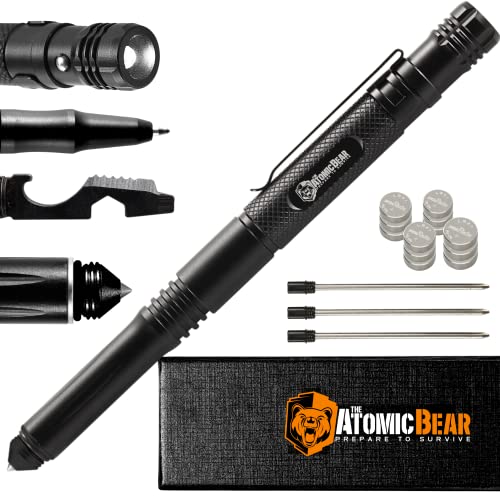


The Real Purpose: Glass vs. Writing
Stop treating the "tactical" part as the primary function. The secondary function is your safety net. If you buy a pen that writes like garbage because it’s too focused on being a weapon, you have failed at your daily carry duty. A tactical pen is first and foremost a tool for writing in situations where standard pens fail—rain, grease, upside down, or when you are wearing gloves.
The "tactical" aspect comes from the tip. It should be hardened steel or tungsten carbide designed to shatter tempered glass in a car accident or break a lock. Do not buy a pen with a jagged, exposed blade edge. That is a gimmick that will cut your pocket lining and get you arrested at airport security. You want a blunt, reinforced tip that concentrates force into a small point.
Material Matters: Aluminum and Titanium
Your pen needs to survive being dropped on concrete, sitting in a wet pocket, or riding in your EDC bag with keys. Stainless steel is heavy and expensive for this application. You want 6061-T6 or 7075-T6 aluminum. It is light, corrosion-resistant, and strong enough to drive through glass without bending.
Titanium is the gold standard if you have the budget. It is lighter than steel and stronger than aluminum. However, titanium can be slippery in the hand. Look for knurling or anodized finishes that provide grip when your hands are wet or sweaty. Avoid pens with loose tolerances. If the cap rattles or the body wobbles, it will fail when you need it most.
The Refill Problem You Need to Solve
This is where 90% of tactical pen buyers get burned. Many manufacturers use proprietary refills that are impossible to find at a gas station or office supply store. If the ink runs out and you cannot replace it, your $60 pen is now a paperweight.
Stick to standard international refill sizes. The Parker Jotter style (G2) or the Pilot G2 style are common. Some high-end pens use proprietary refills that are high quality, but verify that you can buy replacements online before you commit. A tactical pen is useless if it cannot write. Check the ink type too; gel inks flow better in cold weather than ballpoint, but they take longer to dry.
Clip Quality and Carry Position
Your pen needs to stay on your person. A weak clip that snaps off after a week is worse than no clip at all. Look for deep pocket clips made of stainless steel or titanium. They should hold the pen securely in a shirt pocket, notebook, or EDC pouch without falling out when you sit down.
Consider your carry position. Do you prefer right-hand tip-up or tip-down? Tip-up is faster to draw but can dig into your leg if you sit for long periods. Tip-down is more secure and comfortable but slightly slower to access. Match the clip orientation to your daily routine. If you wear a tactical belt, ensure the pen fits in your existing loops without adding bulk.
Legal Realities and Security Checks
Tactical pens exist in a gray area. In most jurisdictions, they are legal because they are primarily writing instruments. However, carrying one with an exposed blade or a spike is illegal in some areas. Stick to the blunt tip design to avoid issues.
Be aware of security checkpoints. Airports and courthouses often confiscate items that look like weapons. A tactical pen might be flagged if it looks too aggressive. If you travel frequently, choose a model that looks more like a standard high-end pen (like a Montblanc or Pelikan knockoff) rather than one that looks like a military tool. Discretion is part of effective EDC.
Frequently Asked Questions
Can a tactical pen really break car glass?
Yes, if it has a hardened steel or tungsten tip and you strike the corner of the window with significant force. It is not magic; it relies on physics.
Are tactical pens legal everywhere?
In most places, yes, as long as they do not have a blade. Always check local laws regarding "impact weapons" or concealed carry items.
Do I need a titanium pen?
No. High-grade aluminum is sufficient for 99% of users. Titanium is lighter and more durable but costs significantly more.
What is the best refill type?
Parker-style G2 refills are the most widely available. Pilot G2 refills are also excellent and easy to find in stores.
Can I use a tactical pen for self-defense?
You can, but it is not designed for prolonged combat. It is a distraction tool or an escape tool. Do not rely on it as your primary defense.
A tactical pen is a small investment in preparedness. It bridges the gap between office utility and emergency survival. Choose one that writes well, carries comfortably, and uses standard refills. Avoid gimmicks. Keep it simple, keep it reliable, and keep it on your person.


