

How To Choose The Right Edc Belt Pouches 2026
By Cole Briggs
Your gear is only as effective as your ability to access it when seconds count. A high-end knife or flashlight is useless if it’s buried under a loose wallet in a bag that hasn’t been organized in years. The modern EDC landscape has shifted from pocket-carry to belt-carry for heavy-duty tools, tactical flashlights, and multi-tools like the Leatherman or Gerber. You need a system that keeps your equipment secure, accessible, and protected from the elements without adding unnecessary bulk or noise.
Quick Answer
Choose a belt pouch based on retention security (snap, velcro, or magnetic), material durability (Cordura or Kydex), and specific tool compatibility. Prioritize low-profile designs that sit flush against your hip to prevent snagging, and ensure the carry position aligns with your dominant hand for rapid deployment.
Table of Contents
Our Top Picks
Affiliate disclosure: if you buy through these links, we may earn a commission at no extra cost to you.

Retention Mechanisms: Snap vs. Velcro vs. Magnetic
The single most critical factor in a belt pouch is how the tool stays inside. If your flashlight falls out when you bend over to tie your shoe, the pouch has failed. You have three primary options for retention, each with distinct trade-offs.
Snap closures are the gold standard for reliability. A high-quality brass or stainless steel snap provides positive closure that resists accidental opening during physical activity. It’s silent, durable, and works in mud or snow where other mechanisms might fail. The downside is speed; you have to fumble with the flap.
Velcro (hook and loop) offers rapid access but degrades over time. Dust, lint, and hair accumulate on the hook side, eventually causing the pouch to open unexpectedly. If you use Velcro, ensure it has a secondary snap or magnetic assist to keep the flap closed when not in use.
Magnetic closures are gaining traction for speed but require caution. Strong neodymium magnets allow one-handed opening and closing, which is vital in emergencies. However, you must verify that the magnet won’t interfere with your EDC compass or cause accidental closure on metal objects like keys.
Material Matters: Fabric, Leather, and Kydex
The construction material dictates the lifespan and weight of your carry system. Avoid cheap nylon that pills or frays after a few months of daily use.
Cordura Nylon (500D to 1000D) is the industry standard for tactical EDC. It’s abrasion-resistant, lightweight, and water-repellent. Look for pouches with reinforced stitching at stress points. The texture provides good grip, meaning tools won’t slide out easily.
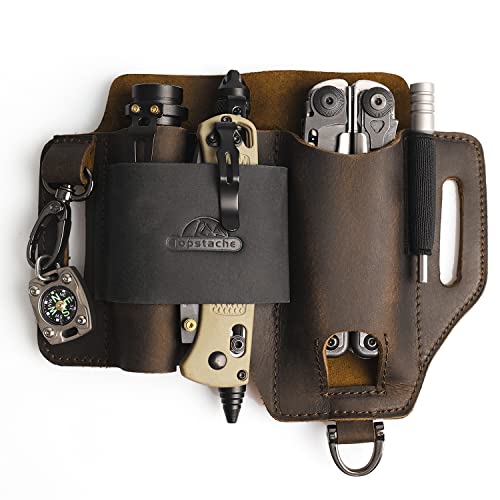
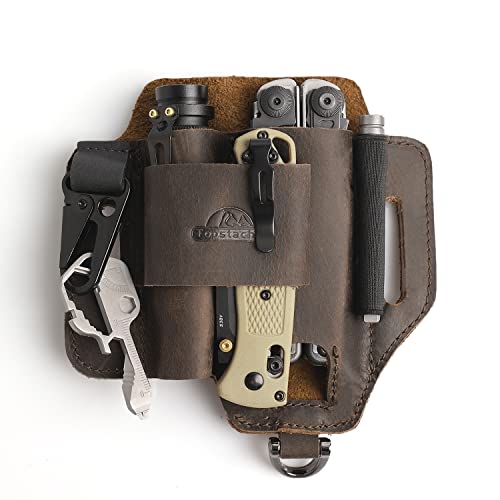
Leather offers a professional aesthetic and molds to your body over time. It’s quiet against clothing and durable, but it adds weight and requires maintenance. Leather is also less effective in wet conditions unless treated heavily. Use leather for formal environments where tactical gear looks out of place.
Kydex is a thermoplastic sheet that provides rigid, molded retention. It’s immune to water, dirt, and temperature changes. A Kydex holster or pouch will never sag or stretch. The trade-off is noise; walking with hard plastic against your belt buckle can be loud in quiet environments.
Profile and Carry Positioning
Your EDC belt pouch should not be a bulging sack. A high-profile pouch catches on doorframes, chairs, and car doors, potentially dislodging your gear or drawing unwanted attention. Aim for a low-profile fit that sits flush against your hip.
Consider the carry position. Most right-handed users prefer their primary tool (knife or flashlight) on the strong-side hip for immediate access. Secondary tools, like a multitool or tactical wallet, can be carried on the off-hand side or in a separate pocket to balance weight distribution.
Check the belt loop width. Standard 1.5-inch webbing is common, but some modern belts are narrower (1 inch) or wider (2 inches). Ensure the pouch loops match your belt system. If you use a tactical rig, look for MOLLE compatibility to attach additional pouches securely.
Modularity and Expansion
Your EDC loadout changes. One week you might carry a heavy Gerber multitool; the next, a slim titanium wallet. A rigid pouch that fits only one item is limiting. Look for designs with adjustable dividers or expandable gussets.
Expandable pouches use elastic side panels to accommodate thicker items when needed, then compress down for low-profile carry. This is ideal for carrying a tactical pen alongside a small flashlight in the same slot.
MOLLE/PALS webbing allows you to attach multiple pouches together or to a backpack. This modularity lets you build a system that grows with your needs without buying entirely new gear. However, avoid overloading your belt; too much weight causes sagging and discomfort.
Legal and Safety Considerations
While less discussed than knife laws, belt pouches have legal implications. Ensure your pouch design does not inadvertently expose blades or sharp edges when drawn. A secure retention mechanism prevents the tool from falling out in public spaces, which could be interpreted as reckless endangerment.
Also, consider concealability. If you carry a tactical knife in a jurisdiction with strict open-carry laws, a low-profile pouch that doesn’t outline the blade’s shape is essential. Bulky pouches create a "silhouette" that signals what you’re carrying before you even draw it.
Frequently Asked Questions
Can I use a belt pouch for both a knife and a flashlight?
Yes, but only if the pouch is modular or has separate compartments. Mixing tools can cause damage; a knife blade can scratch a flashlight lens, and vice versa. Dedicated slots are safer.
What is the best belt width for EDC pouches?
1.5 inches is the most common standard for tactical belts. Ensure your pouch loops match this width to prevent spinning or slipping during movement.
Do magnetic closures interfere with EDC gear?
They can interfere with analog compasses and some digital watches. Test your specific magnet strength against your gear before relying on it for daily carry.
How do I prevent my pouch from sagging?
Use a rigid insert (like Kydex or stiffener) inside the pouch, and ensure your belt is tight enough to support the weight. Distribute heavy items evenly across both hips.
Is leather better than nylon for EDC?
It depends on your environment. Leather is quieter and more professional-looking but heavier and less water-resistant. Nylon is lighter, more durable in wet conditions, and easier to clean.
Can I carry a multitool in a standard knife pouch?
Only if the pouch has adjustable dividers. Standard knife pouches are designed for fixed profiles and may not secure the irregular shape of a Leatherman or Gerber.
Your belt is your primary platform for daily carry. Treat it with the same respect you give your tools. Select a pouch that prioritizes secure retention, appropriate material for your environment, and a low profile that doesn’t hinder movement. Build a system that works for you, not against you.


