

how to select the right edc tactical multitool for memorial day camping trips under $50
Here's what matters: you want steel that holds an edge without constant stropping and resists rust in damp camping conditions. 420HC and 12C27 are solid mid-range choices—they're not exotic, but they perform. Avoid anything labeled "stainless steel" without a grade designation; that's usually marketing speak for "dull fast and cheap." For under $50, you're realistic looking at high-carbon stainless blends, not premium steel. The real difference between $30 and $50 tools is usually build quality and edge geometry, not the material itself.
Table of Contents
Our Top Picks
Affiliate disclosure: if you buy through these links, we may earn a commission at no extra cost to you.

Factors to Consider
Blade Steel: Don't Fall for Marketing Hype
Plier Design and Spring Mechanism: The Workhorse Test
The pliers are your most-used feature on a camping trip. You need a spring that doesn't jam and a pivot that doesn't wobble after five uses. Check for a coil spring (returns smoothly) rather than a flat spring (weakens fast). The cutting surfaces should be hardened but not brittle—they'll nick if you're twisting wire or cutting anything tougher than paracord. Handles should be textured or rubberized; smooth aluminum gets slippery when wet, and wet hands are standard in camping.
Pocket Presence and Weight Reality
A camping multitool lives in your pocket or pack, which means it needs to vanish. Anything over 4 ounces starts feeling like extra weight after an hour of hiking. Most sub-$50 Leatherman and Gerber options fall between 3 and 4 ounces—acceptable. Clip attachment matters too: a deep-carry clip keeps the tool low and hidden; a cheap spring clip that rides high looks tacky and bounces. Test the clip tension before you buy if possible; loose clips lose gear.
Tool Redundancy: You Don't Need 47 Functions
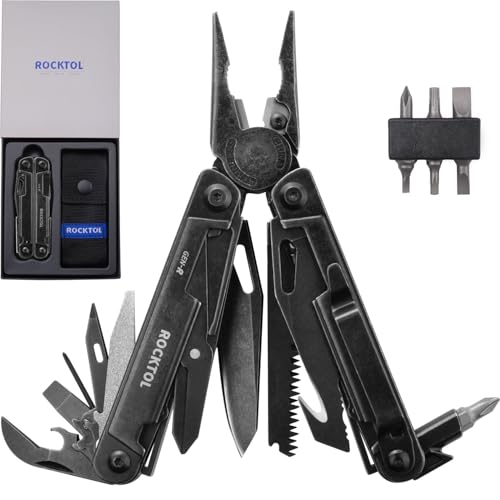
Multitools under $50 cram in features because manufacturers know budget shoppers count blade count like it matters. You actually need: pliers, knife, can opener, Phillips and flat screwdrivers, and a file. Scissors, tweezers, and a toothpick are nice but skippable. More tools mean more weight, more complexity, and more chances for something to break. For camping, a streamlined design with solid execution beats a kitchen sink with loose joints.
Lock Type: Safety Over Convenience
Locking blades are non-negotiable; a blade that folds during use is a hospital trip. Most sub-$50 tools use liner locks or frame locks—both work fine if they're tight. Avoid "nail nicks" that require two hands to open unless you're specifically buying a one-handed tool. Test the lock by pulling hard on the blade; there should be zero flex. A blade lock that requires three uses to loosen isn't a flaw; it's proof the manufacturer didn't cheap out on spring tension.
Frequently Asked Questions
What's the best multitool under $50 for camping?
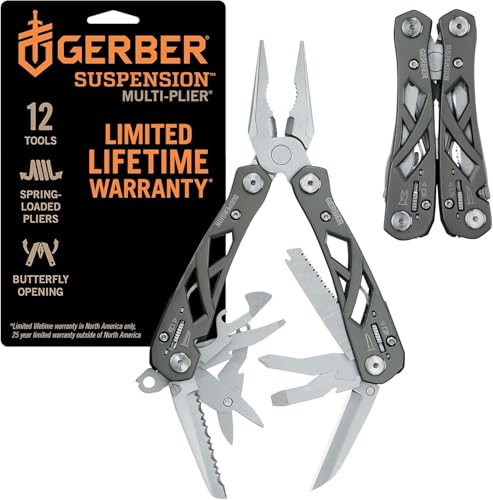
The Leatherman Signal and Gerber Suspension are legitimate choices in this price range. The Signal edges ahead for camping specifically because it includes a serrated blade, wire stripper, and carabiner—features that matter outdoors rather than in an office. The Suspension is lighter and more compact, better if you're backpacking long distances.
Is stainless steel actually worse than high-carbon steel for camping?
In wet conditions, stainless performs better because it resists rust—which matters on a camping trip where you can't baby your gear. High-carbon steel holds a sharper edge longer but rusts if you don't dry it, making it worse for extended outdoor use. For camping, modern stainless-steel blades (like 420HC) are the smarter choice, even if they don't sound as impressive.
How do I know if a multitool will actually fit in my pocket?
Measure the closed length and compare it to a phone you own—most multitools under 4 inches fit standard cargo pockets. Check the clip depth too; a shallow clip leaves the tool riding high and visible. If you're going to clip carry, bring the tool with you when shopping and test it against your actual pocket setup.
Do I really need a locking blade?
Yes. A non-locking blade is a liability on a camping trip where you're cutting wood, paracord, or food with one hand while holding something else. The brief moment of attention you lose checking if the blade is locked is the moment it folds and catches your finger. Non-locking is acceptable only for tiny screwdrivers or tweezers—never for primary cutting tools.
What's the difference between a Leatherman and a Gerber in this price range?
Leatherman tends toward better build quality and tighter tolerances; Gerber emphasizes weight savings and pocket design. For camping (stationary, controlled conditions), Leatherman's durability wins. For backpacking (weight matters), Gerber makes sense. Both brands stand behind their products with solid warranties, so you're not gambling either way.
Can I legally carry a multitool while camping on public lands?
Most U.S. national forests and BLM lands allow folding knives and multitools without restriction, but state and local laws vary wildly—and some private campgrounds have their own rules. Check the specific area's regulations before you go. If your camping trip crosses state lines, verify each state's blade length limits; most accept blades under 3 inches, which covers almost all sub-$50 multitools.
Should I spend the extra money on a premium multitool or save it?
For occasional camping trips, a solid sub-$50 option is enough—you're not relying on it for survival, just convenience. If you're camping more than three times a year, spending $80–$120 on a Leatherman Wave or Signal Plus pays off in durability. The jump in build quality between $50 and $100 is real; the jump between $100 and $300 is mostly brand name.
Conclusion
For Memorial Day camping under $50, pick the Leatherman Signal if you want features and proven reliability, or the Gerber Suspension if you're hiking long distances and weight matters. Both tools will handle five days of realistic camping without failure, and both come with warranties that actually mean something.
Not for you if: you're buying a gift for someone who won't use it (multitools are personal), you need a one-handed opening blade (expect to pay more), or you're the type who carries 12 backup items "just in case" (redundancy is fine; paranoia costs money and pocket space).


