

Best Tactical Flashlights for Everyday Use
🏆 Top Picks at a Glance
 #1
#1
Best Overall
Streamlight 59101 TLR-3X Tactical Weapon Light 500-Lumen 6500-Candela USB Rechargeable Capable Rail-Mounted LED Flashlight, Compatible with 1913 Subcompact Handguns, Black
$140.03
Check Price →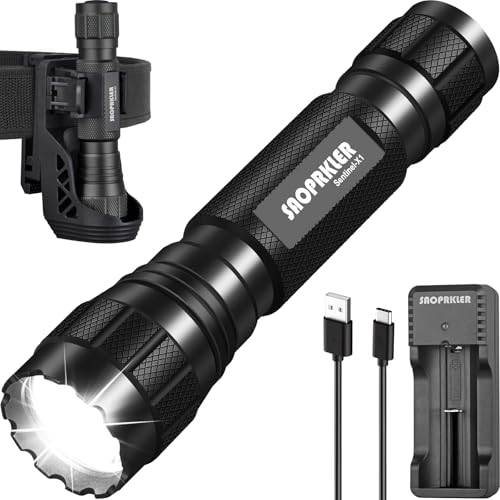 #2
#2
Runner Up
SAOPRKLER Tactical Flashlights High Lumen-Police 1200 LM Flashlight with Holster for Duty Belt,Single Mode LED Flashlight for Camping/Law Enforcement-Sentinel-X1
$28.89
Check Price → #3
#3
Best Value
Flashlight 10000 High Lumens Rechargeable - 30W Super Bright LED Flash Light | 5000ft Beam & 12H Long Lasting USB C High Powered Handheld Police Flashlight for Home, Camping, Hiking, Emergency
$21.99
Check Price →Our Top Picks
Affiliate disclosure: if you buy through these links, we may earn a commission at no extra cost to you.
Factors to Consider
Lumens, Candela, and Beam Pattern
⚡ Quick Answer
Don’t chase headline lumens. Lumens tell total light output; candela and beam pattern tell you how far it will reach and how useable that light is up close. For everyday carry you want a balanced spill and throw — roughly 300–1000 lumens with 2,000–20,000 cd is practical for neighborhood and parking-lot work. Beware lights that spike lumens for a few seconds and then thermal step down; regulated output is the mark of a serious tool.
Table of Contents
Battery Type, Runtime, and Rechargeability
Battery chemistry dictates real-world use: 18650/21700 give long runtimes and higher sustained output, AA/CR123A give universal availability, and 14500 boosts output but eats runtime and lifespan. Onboard USB-C charging is a strong feature for daily carry — fast top-ups in the car or at the desk beat carrying spare cells for most people. Always check runtime at usable output, not at the lowest or peak flash numbers manufacturers advertise.
Size, Pocket Presence, and Carry Options
Decide where the light lives: pocket, belt, or bag. Slim, two-inch head lights and compact bodies with deep-carry clips disappear in a pocket; bigger 21700 lights need a belt holster. Clip quality, bezel profile, and button placement affect draw speed and comfort — a light that rattles or flips in the pocket is not EDC. Try to keep weight under 150–200g for pocket carry unless you need the extra runtime.
Build Quality, Materials, and Weatherproofing
Look for Type III hard-anodized aluminum or stainless bodies, tempered glass with anti-reflective coating, quality O-rings, and solid tailcap threads. IPX7/IP68 water resistance and a good impact rating matter; a light that leaks or cracks will fail when you need it. Don’t fall for flashy coatings or decorative bezels that compromise grip — function first.
User Interface, Lockouts, and Practical Modes
UI matters more than max lumens. A simple tail-switch or side-switch with tactile feedback and a true lockout is better than a gimmicky multi-button interface. Look for mode spacing that includes a low, medium, and high plus a dedicated strobe or SOS only if you actually practice with it. Electronic lockouts and mechanical twists prevent accidental activation and battery drain in your pocket.
Frequently Asked Questions
How many lumens do I really need for everyday carry?
For most EDC tasks 300–1000 lumens is plenty: 300–500 covers close work and walking, 800–1000 gives usable range for parking lots and yards. Higher numbers are useful for short bursts or professional work, but expect heat, battery drain, and step-down unless the light is well engineered.
Is a rechargeable flashlight better than one that uses disposable batteries?
Rechargeable (USB-C onboard or rechargeable 18650/21700) is more convenient and cost-effective for daily use, and charging from a phone bank is practical. Keep a couple of quality spare cells or a compact USB charger if you’re in remote areas — rechargeables fail if you can’t top them up and you forgot spares.
Can a flashlight be used for self-defense?
A bright, focused beam can disorient an attacker and buy you seconds, but it’s not a substitute for training or legal knowledge. Avoid overemphasizing strobe gimmicks; a reliable high-output beam, solid body for impact, and practiced deployment are what matter in a real encounter.
Are tactical flashlights legal to carry?
Generally yes in most U.S. jurisdictions, but laws vary internationally and locally about "weapons" and use of light to disorient or blind. Learn your local statutes and remember that improper use can create legal trouble even if carry itself is allowed.
What’s the difference between flood and throw, and which should I choose?
Flood provides wide, even illumination for close tasks; throw produces a tight hotspot for long-range visibility. Choose flood for everyday urban carry and tasks (reading maps, interior work), choose throw if you need to identify distant threats or scan large outdoor spaces.
Do I need a tactical bezel or glass-breaking feature?
Those features are often marketing extras. A sturdy, flat bezel is useful for impact and self-defense if you train with it, but “glass breaker” tips are rarely used in civilian life and can snag clothing. Prioritize reliable light output and comfortable carry over gimmicky extras.
How important is mode memory and should I disable strobe?
Mode memory is useful if you want the light to come on at low or your last-used setting; it prevents surprises when drawn. Strobe should be a deliberate, easily accessed option — not the default — and many professionals disable or tuck it behind a separate sequence to avoid accidental activation.
Conclusion
Pick: Fenix PD36R. It balances pocket-friendly size, USB-C rechargeable 21700 runtime, regulated output, and solid build — the kind of tool you can carry every day without excuses. Not for you if you need a tiny keychain light, want extreme throw in a compact package, or are on a shoestring budget; if that’s the case look at compact single-cell lights or budget AA/CR123 models instead.


