

Best Pocket Tools For Daily Carry
Our Top Picks
Affiliate disclosure: if you buy through these links, we may earn a commission at no extra cost to you.


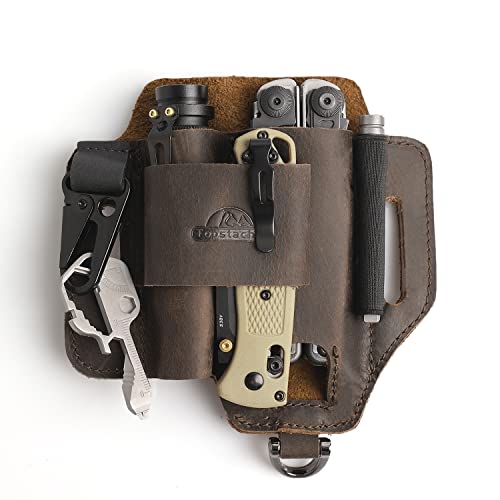
Factors to Consider
Blade steel and edge retention
⚡ Quick Answer
Pick a steel that balances edge retention with ease of sharpening — premium choices are CPM-S35VN, S30V, or 154CM for a very serviceable compromise. Carbon steels like 1095 cut well and are tough, but rust and patina are real maintenance costs; stainless 420HC and AUS-8 are fine for budget users. Avoid marketing-only “proprietary” steels unless you can verify heat treatment and seller credibility. Real-world: a well-heat-treated mid-range stainless will outperform a poorly heat-treated exotic every day.
Table of Contents
Lock mechanisms and deployment
Lock reliability is non-negotiable — frame locks, Axis-style locks, and proper lockbacks are proven, durable systems; cheap liner locks often flex and fail under stress. One-handed opening (flipper or thumbstud) is practical, but assisted-opening mechanisms are illegal in some jurisdictions, so check local law. Look for solid lockup, minimal blade play, and serviceable pivots (torx, bearings or phosphor-bronze washers). If you carry for utility or duty, favor stout locks over gimmicky quick-deploy advertising.
Pocket presence and carry ergonomics
Size and weight determine whether you'll actually carry the tool. Sub-3.0" blades and tools weighing 2–5 oz sit comfortably in most pockets; anything heavier begins to migrate to a bag or belt sheath. Clip placement (tip-up vs tip-down), reversible clips, and low-profile handles matter when you're seated or in uniform — test for printing and snag risk. If it prints or pinches, it’s not a usable EDC regardless of specs.
Build quality, serviceability, and materials
Hardware and assembly tell you what you’re buying: torx screws, heat-treated pivots, and replaceable parts signal a design meant to be maintained. Handle materials should match use — G10 or Micarta for grip, titanium for light strength, stainless for corrosion resistance. Beware sealed units that can’t be serviced; tools that can be stripped, cleaned, and re-lubed will outlive trends. Warranty and vendor support separate quality manufacturers from weekend hobby brands.
Legal carry and real-world utility
Know the law before you put a blade or tool in your pocket—blade length, locking mechanisms, and one-handed openings are regulated differently by state and country. Consider the primary tasks you perform: cutting cord and packaging, prying, or first-aid uses demand different tool sets. Multitools are versatile on duty; dedicated knives are faster for slicing tasks. Don’t buy “tacticool” features that add weight and attract attention but deliver no real utility.
Frequently Asked Questions
What blade length is best for everyday carry?
Short answer: 2.5–3.0 inches for maximum legality and utility. That length handles most daily tasks, is less likely to violate local laws, and fits discreetly in a pocket without being cumbersome.
Which lock mechanism is safest for hard use?
Frame locks and Axis-style locks are the most robust for repeated heavy use; proper lockbacks are also very reliable. Avoid flimsy liner locks on knives you plan to use as a tool under torque.
How many lumens do I need in an EDC flashlight?
100–300 lumens covers daily tasks and close-range work without blowing out your night vision; 400–1000 lumens is useful for search or clearing a yard but draws more battery and attention. Look for regulated output, a defined beam profile, and tailcap or side switches appropriate for your carry hand.
Are assisted-opening knives legal to carry?
Sometimes — laws vary widely. Many jurisdictions treat assisted-opening knives or one-handed opening as restricted, so verify state and local statutes before relying on them for EDC.
Should I get a multitool or a single-purpose knife?
Get a multitool if you do varied tasks—Leatherman-style tools handle pliers, wire work, and screwdriving that a knife can’t. Get a dedicated knife if cutting performance, weight, and quick deployment are your priorities.
How do I choose blade steel if I hate sharpening?
Choose a stainless steel with good edge retention like S35VN, CPM-20CV, or a well-made 154CM; they hold an edge longer and resist corrosion. No steel is maintenance-free — if you truly hate sharpening, consider replaceable blades or high-hardness steels paired with a sharpening service.
What build features indicate a tool is worth repairing, not replacing?
Removable hardware (Torx screws), replaceable parts, and a reputable warranty are key indicators. Also look for accessible pivots and common bearing or washer systems—those make field repairs and maintenance realistic.
Conclusion
My pick: the Leatherman Wave Plus as the best overall pocket tool — durable, serviceable, and genuinely useful for both duty and daily life. Not for you if: you want an ultra-light minimalist knife or live where locking/one-hand-open knives are prohibited; in those cases pick a small fixed-blade or a legal non-locking multi-tool instead.


